Wednesday, August 22, 2012

The Lost World: Jurassic Park (1997)


Directed by Steven Spielberg
Starring Jeff Goldblum, Julianne Moore, Vince Vaughn

As a kid, the original Jurassic Park was one of my favorite movies ever.  It was my first PG-13 movie (I was five or six, at the peak of my dinosaur fanaticism), my first scary movie, and probably my most worn out VHS tape.   I was too chicken to see the original in the theaters in 1993, but I remember having the opportunity, and passing.  So when its sequel, The Lost World: Jurassic Park, came out three years later, it was the first “cinema event” that I remember anticipating.  Like so many other occasions, my dad and I went to see a weekend matinee showing and I left the theater thinking, “that was AWESOME!”  Having cool looking dinosaurs, and lots of them, was more than enough to satisfy my 8 year old tastes.  However, time has not treated The Lost World well.  As I grew older and began to view film with a more critical eye, my memories of the film soured without ever taking the time to revisit the film in the past decade.

So what caused this souring?  It could be the negative reviews I’ve encountered.  It could also be the unfortunate comparisons with the original it will inevitably endure.  And unlike The Lost World, the original is a film I’ve revisited numerous times in adulthood and it holds up amazingly well in every aspect (enough to find its way on this blog’s “Hall of Film Fame”).  The timing felt appropriate to revisit the sequel to make an educated decision on its merits.  Plus, worst-case scenario, the dinosaurs would look and sound incredible on bluray, which would satisfy my inner 6 year old.

Everyone knows that director Steven Spielberg is a master storyteller, and the telling of The Lost World’s story is no doubt impressive.  From a technical standpoint, the 15 years since its release have done very little to “date” the film.  Under Spielberg’s direction, the dinosaurs, of both the CGI-rendered and mechanical puppet variety, beautifully mix with the human actors and sprawling vistas.  Held under the scrutiny of the highest definition in my home theater, these dinosaurs still feel as real as anything we’d see in a 2012 blockbuster (where the digital would definitely outweigh the tangible in CGI/puppetry balance).  Spielberg and his collaborators achieved something amazing when they brought these dinosaurs to life, an achievement that is responsible for making these films timeless.

Spielberg also knows how to create effective action sequences and, though they might not be as iconic either the “T-Rex and Jeep” or “Velociraptors in the Kitchen” scenes in Jurassic Park, there are some intense sequences in The Lost World.  As with many sequels, the filmmakers “up the ante” to make everything much bigger.  This is chilling when a pair of T-Rex parents attack our heroes in a trailer, exhilarating when the ill-willed hunters chase down a dinosaur stampede, and impressive when Jeff Goldblum battles with a group of digital raptors.  There are more dinosaurs in The Lost World and Spielberg is more ambitious with how they are used, such as its famous (or infamous) attack on the mainland.

Though bigger isn’t better, and Jurassic Park has some magic that is missing in the sequel.  One gets the sense that The Lost World’s production was entirely driven by its box office prospects rather than an artistic need to continue the Jurassic Park story.  Spielberg is great at telling the story, but the story he’s telling is lacking.  With only one character returning in a major role in Dr. Ian Malcolm (Jeff Goldblum), the memorable skeptic who cautioned against “playing God,” a lot of weight is given to what was just a supporting role before.  Therefore, character background is hastily written, giving him a semi-estranged teenage daughter and a stubborn girlfriend, Sarah (Julianne Moore), who brings him back to the island in the first place.  Goldblum does his best with the material but it never allows Dr. Malcolm to develop into anything with significant depth. 

The bad writing extends further beyond the lead character.  Continuing The Lost World’s bigger but not better theme, a huge ensemble cast is introduced.  Joining Goldblum and his dysfunctional little family as the “good guys” are a photographer (Vince Vaughn) and an equipment specialist (Richard Schiff, or “It’s Toby from The West Wing!” as I knew him).  There is also a slew of antagonists on the island, led by a master hunter after a legendary “catch” (Pete Postlethwaite) and the greedy corporate face of InGen, which owns the island (Arliss Howard).  Obviously, the supporting cast is even less developed than Dr. Malcolm and you don’t really care what happens to them either way.

The Lost World is one of those films where the story progresses a little too conveniently, usually as a result of some completely illogical decision by one of its characters.  It’s as if Spielberg had great ideas for action sequences and then just threw something together to link those ideas.  Whether its a trailer that’s unnecessarily parked too close to a cliff or the mention of gymnastics skills that may later come in handy, these conveniences really hampered my enjoyment of the film.  Forced comedy, which is never truly funny, is apparent throughout.  No matter how dire the situation, these characters were sure to have a “zinger” ready at their disposal.  In Jurassic Park, more care seemed to be taken to develop its characters and the story progressed more organically.  Even the humor that came through in the original naturally felt like a part of that world, not by some arbitrary effort to add levity.


Now that I have seen The Lost World though a non-nine year old’s eyes, it is clearly a weak film; yet one that is incredible visually.  I might even recommend watching it for the action sequences alone (they are well-done and frequent), if you have extra time and a good system to view it with.  But great special effects can only take you so far.  The film’s weaknesses were great and they were many.  After weighing all of The Lost World’s pros and cons, I cannot say it’s awful but its not very good.  My concluding thoughts remain “just watch the original,” and I’ll actually be able to back up my words.  The original is just about perfect, after all.


Mark it 4.

Wednesday, August 15, 2012

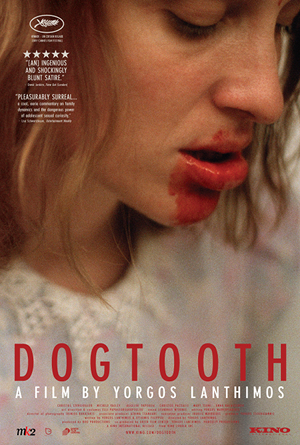
Dogtooth (2009)

Directed by Giorgos Lanthimos
Starring Aggeliki Papoulia, Hristos Passalis, Mary Soni, Christos Stergioglou

For whatever reason, awful parenting is a familiar theme in many films.  However, as bad as some film parents may be, rarely does it end up in the odd and dark places that Greek filmmaker Giorgos Lanthimos takes us in Dogtooth.  Its oddness became apparent from the quick description I got from my brother about a weird movie where the parents shelter their (grown up) kids and teach them misguided vocabulary.  But I was unprepared for just how odd this family is and just how dark the physical and mental abuse inflicted on these kids would be.  That being said, it is still an impressive piece of filmmaking that tells a completely unique story - a film that one may feel a little disgusted for liking, but liking nonetheless.  You just have to prepare yourself to be challenged going in and it might be a rewarding experience.

We are all blank slates at birth.  Throughout childhood (and beyond), we learn from our experiences in the world to become the people we currently are.  When imprisoned in the confines of one’s home your entire life, the experiences that influence what fills a person’s "slate" is vulnerable to the whims of whoever is in control.  That is the situation the three nameless (telltale sign that something is wrong with these people) children in Dogtooth’s family find themselves in.

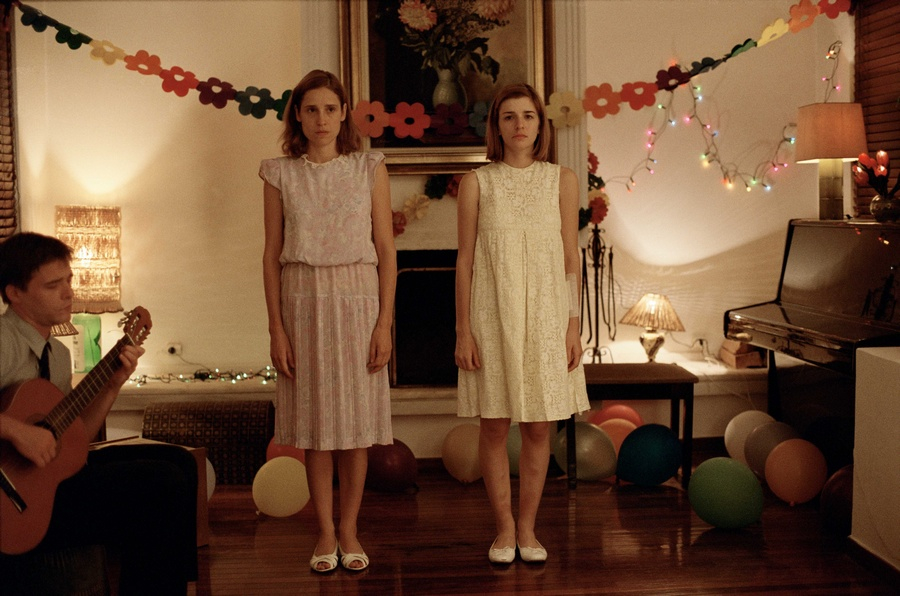
It quickly becomes clear that these children have been cut off from the outside world to be molded into their parents’ mindless creations.  From the film’s first shot, the oddness of their parenting is undeniable.  The brother and two sisters listen to inaccurate vocabulary lessons that define “sea” as a wooden armchair and “excursion” as a strong floorboard.  These lessons are regular occurrences as one realizes later in the film; such as a “telephone” being salt and “zombies” a small yellow flowers, to these kids.  Pretty fucking weird, right?  However, the weirdness quickly descends into outright disturbing territory.

These parents control every aspect of their children’s lives.  They define roles for each to play in the family (one daughter is trained to be something of a family physician), set up competitions for their affection, and brutally punish misbehavior.  With their entire perception of the world beyond the home predetermined by their draconian captors, these poor people have no idea how terrible their situation is. 

Yet during the course of the film, a seed is planted that there is a different life outside the fence that may be better.  Of course, it would be a life that their 20 plus years of familial imprisonment would leave them dangerously unprepared for.   Despite the father’s best efforts to remain in control, it is the one aspect of the outside world he brings in who is responsible for planting these seeds.  In his sick control over his son’s sexuality, he pays a woman to come to the house (blindfolded, of course) to satisfy his son’s needs.  Yet this woman has not spent decades imprisoned within this house and has free will, which begins to "corrupt" the control one of the kids.

From this moment, Dogtooth gets increasingly violent and increasingly disturbing (without losing its regular oddness).  As the kids unknowingly enter a psychological chess match with their deranged parents, life in the house gets more and more terrifying.  When the lies do not keep the children in line, violence will.  These tactics work better on some of the children than others.

The oddness and psychological horror I have described in Dogtooth cannot do it justice.  For every strange oddity mentioned, there are probably a dozen others.  The strangest being when an old Frank Sinatra record is “translated” as lesson from their grandfather about the importance of loving Mom and Dad.  All the more disturbing, Lanthimos never allows the audience to get a glimpse of the reasoning behind the parents’ unorthodox (to put it nicely) and disgusting (to put it honestly) methods.  Every action is a mystery, and remains a mystery beyond the credits, which only heightens their villainy.

If this review has left you intrigued, despite its staunch art house credentials (which many shy away from, unfortunately) and challenging subject matter, I still feel obligated to provide further warning.  Dogtooth is a good film but very difficult to sit through.  The physical, mental and sexual abuse endured by these characters is blunt and horrifying.  Its violence is graphic (but never with a sense of “action movie” fun), as is its nudity and sex scenes (but never with a sense of “erotic movie” fun).  This is a brutal film with brutal themes:  mental abuse, incest, domestic violence, rape, corporal punishment, self-mutilation. 


Clearly, this is rough material.  But if you are prepared for what is in store and willing to endure a gut-punch of a movie, you will be rewarded with a work of art unlike any you’ve ever seen.  That was my reaction to Dogtooth.  I did not have a lot of fun while watching it and am in no rush to see it again, but it is something I am definitely glad to have seen.  There’s a chance that you may agree.  And also a pretty good chance that you will be horrified beyond belief and disgusted by my recommendation... but you can’t say I didn’t warn you.


Mark it 6.

Saturday, August 4, 2012

Contemporary Iranian Cinema Marathon (Part 2)

In my June 9th post, I had explained the concept behind Filmspotting’s “marathons.”  Over the past weeks, I have relished the opportunity to play along with my favorite podcast’s most recent marathon topic.  To save my readers from scrolling through an endless post covering all six films, I have split my reactions to the Contemporary Iranian Cinema marathon into multiple parts.

My earlier post (part one) covered the first three films I watched while playing along:  Close-Up, Taste of Cherry, and Fireworks Wednesday.  This post (part two) will cover the final three films in the marathon.  And in the near future, I will post a third part in my Contemporary Iranian Cinema coverage where I will wrap up my overall experience and pick out my favorites. 

Hopefully, this can act as a template for how Mark It 8, Dude will address future Filmspotting marathons.


Children of Heaven (1997) – Mark it 6.

Directed by Majid Majidi
Starring Amir Farrokh Hasemian, Bahare Seddiqi, Mohammad Amir Naji

After the first three films in the Iranian Cinema Marathon (covered in my earlier post), I naively expected all Iranian films to be heavy, intellectual works of art.  Therefore, a lighthearted family feature like Children of Heaven really caught me off guard.  After realizing what I was experiencing, it became clear that Majid Majidi’s film is a very sweet entry into the family film genre.  From its linear narrative to its set design that is obviously a soundstage, there are no pretensions of higher art as Abbas Kiarostami and Ashghar Farhadi have previously displayed.  It may not be as intellectually stimulating as previous films in the marathon, but that is okay when the simpler film is well made.

Children of Heaven takes us inside the trials of a small family living in poverty in Tehran, presumably.  This family has many issues to deal with:  trouble paying rent, an ill mother, a father looking for work.  But Majidi limits the focus of the film on an issue affecting the brother and sister in family (who have one of the most heartwarming sibling relationships I have ever seen).  When the 9-year old boy, Ali (Amir Farrokh Hasemian), accidently loses his 7-year-old sister’s, Zahra (Bahare Seddiqi), shoes, the two must share Ali’s ratty old sneakers so their parents won’t find out and worry about something they cannot afford.  The sneakers lead the two on a few adventures as they hunt for Zahra’s lost shoes.  If the old shoes are gone, Ali will risk trouble and do anything to win his sister a brand new pair.

Simple is the best descriptor of this film, but I do not mean that pejoratively.  This small story effectively shows us how serious poverty is for many Iranians.   Something taken for granted so often, footwear, can be cause for life-changing circumstances to some.  The performances by Children of Heaven’s two child stars make the pain these lost shoes cause undeniable, but more importantly the love that unites this family is just as strong.   Majidi also inserts some beautiful moments throughout the film that shows this family bonding.  By its end, you are rooting for them to move into a bigger apartment, the mother to find health, the father to find work, and most importantly, the kids to find their shoes.  This is not a film that will challenge your brain but it is one that can easily warm your heart.   


The Mirror (1998) – Mark it 7.

Directed by Jafar Panahi
Starring Mina Mohammad Khani

At the onset of Jafar Panahi’s The Mirror, a sense of disappointment began setting in.  Throughout this marathon, I have begun generating expectations of what an Iranian film will entail (whether that is good or bad).  What the film begins as is a very simple, and dull, story of a cute little girl who is lost in the big city, trying to get home.  This girl walks around and asks some strangers for help, then walks around and asks some strangers for help.  For forty minutes, I felt boredom set in and was not looking forward to the next fifty.  However, whether it was planned or improvised, The Mirror adds a fantastic twist that tells a similar story, a little girl lost in the city, in a far more interesting way and completely turned the film for me in a very special direction.

In the middle of the film, the little girl we’ve been following through the city, Mina (Mina Mohammad Khani), decides that she no longer wants to be in a movie.  The simple story that began to bore me a bit screeches to a halt, and The Mirror suddenly becomes something like a documentary.  The film’s crew becomes characters themselves and the director (Panahi) changes strategy to tell his story.  From here on out, the young diva takes off to find her own way home, without taking off her microphone, and the filmmakers witness her trek from a distance, with the cameras rolling.  With its newfound realism, every decision this second-grader makes and every stranger she talks to has an added sense of drama that benefits the film greatly.

While watching the “documentary” half of the film, I was a somewhat disturbed by the filmmaker’s irresponsibility as they allow Mina to cross dangerous intersections, approach groups of strangers, and hop in random taxis, for the sake of their film.  But this feeling begins to diminish when you see how smart (and sassy) Mina is and how the people she interacts with are generally nice and caring.  There is a fine line between naivety and over-protectiveness that I struggle with, regarding unknown people and places.  The Mirror shows that people can be nice at heart, helping Mina find her way home, rather than display worse circumstances that I would have initially feared.  Not that I would feel comfortable letting a small child roam the streets of Milwaukee; just my perspective may not be as cynical while I protect them myself.


Offside (2006) – Mark it 8.

Directed by Jafar Panahi
Starring Sima Mobarak-Shahi, Shayesteh Irani, Ayda Sadeqi, Mahnez Zabihi, Golnaz Farmani, Safdar Samandar

After completing Filmspotting’s “Contemporary Iranian Cinema Marathon,” Jafar Panahi emerged as the filmmaker I admired most.  My reasoning is Panahi’s courage to question authority through his art, a dangerous task under Iran’s oppressive regime.  He does this by masking critical questions behind seemingly simple stories (however, this tactic has gotten him into a lot of trouble regardless).  Offside tells simple story of women disguising themselves as men to sneak into a soccer game, a practice strictly forbidden in the Islamic Republic of Iran.  Behind this sports story is a poignant critique of Iran’s absurd standards of gender inequality.  Panahi amplifies the perils women live under without the demonizing the men who must enforce the state’s inhumane policies for their own safety.  The individuals come across as pawns stuck in the state’s cruel game.  It is amazing that Panahi was able to get this film past Iran’s board of censors in the first place.

One of Offside’s most impressive features is its pseudo-documentary feel, aided by Panahi’s decision to shoot at the actual event depicted in the film: Iran’s 2006 World Cup qualifying match against Bahrain.  This is a fictional story that had to adapt its narrative based on the results of an actual game.  Obviously, its celebration of national pride (that the traditions of Iran itself is greater than any current governing body is a theme throughout) could only happen if the game turned out a certain way.  It is a pleasure to watch the joy these women display over their country’s soccer team even as their country’s rules have them stuck in a makeshift jail cell outside the stadium.  Each of these five women’s distinct personalities, histories, and motivations to challenge the state come through as they get their captors to open up and understand their perspective (in an attempt to get updates on the game, of course).  The soldiers are just regular people who have been trained to take on certain roles in their society, not necessarily the cold-hearted monsters that one would assume.

Offside is a gem of a film and one of my favorites of the marathon.  The great risks that these women had to take to do something as simple as seeing your favorite team was humbling.  And the possible repercussions they faced disgusted me.   Yet the bonds these women make during their ordeal and their ability to undermine the oppressive state was inspiring.  Offside shows that the spirit of an individual can be greater than the iron fist of a regime.  For intimating this lesson in modern Iran, Jafar Panahi must be praised.  Unfortunately, Iranian officials took notice as well; he has since been placed under arrest and facing a 20-year ban from filmmaking.  However, the lesson about the individual’s strength that Offside tells can be seen in Panahi’s real life (just Google the story behind his 2011 film, This Is Not a Film, for proof).


*click here to read my reviews of the first three films in the marathon.

Tuesday, July 31, 2012

July 2012 Rundown

Adventureland (2008) – Mark it 7.

Greg Mottola’s Adventureland is a sweet little movie about a recent graduate, James (Jesse Eisenberg), whose post-grad plans of European travel and a move to New York City suddenly fall apart.  He is left in a dull summer job in his hometown working in the games booths at a local amusement park.  A pretty standard coming of age story follows as James makes new friends with Joel (Freaks and Geeks’ Martin Starr) and finds love with Em (Twilight’s Kristin Stewart).  Mistakes are made by everyone to add a bit of drama.  Adventureland is not a movie that will blow you away but one that I enjoy quite a great deal.  Its comedic aspects enlist a lot of chuckles, its sentimental aspects hit their mark, and the performances are pretty solid all around (with the possible exception of Stewart).  The film’s setting must also be recognized as we are completely transformed, from the clothes and music to sets and references, into its small town 1980s world.


Step Brothers (2008) – Mark it 8.

I was initially going to “mark” this Will Farrell and John C. Reilly vehicle lower out of some film snob urge that didn’t want to see an admittedly “dumb” comedy rated so highly.  In discussing Step Brothers later, I was reminded exactly how much I laughed, from the belly with a few snorts and tears sprinkled, from beginning to end.  This story of two 40-something losers still living at home and adjusting to their newfound familial ties is about as good as a comedy can get.  As the two leads, Farrell and Reilly, match wits in games of one-upmanship then find common ground, you will be going hysterical at every silly and raunchy gag.  These are two comedy giants and Step Brothers is right in their wheelhouse.  Also, the supporting cast is just as strong.  Mary Steenburgen and Richard Jenkins have their share of good laughs as the parents, and Parks & Recreation’s Adam Scott is especially good in a surprising turn as Will Farrell’s complete asshole of a brother.


The Amazing Spider-Man (2012) – Mark it 3.

Rebooting the Spider Man franchise after just ten years isn’t a sin; the sin comes from rebooting it without adding anything new, interesting, or necessary.  Director Marc Webb’s (500 Days of Summer) version of the web-slinger is a victim of terrible script.  Gone is the character development and comedic touches seen in Sam Raimi’s 2002 film.  Andrew Garfield’s Peter Parker is not the dweeb I liked so much in earlier films, but an angsty emo whiner (who is kind of a jerk).  Emma Stone and Rhys Ifans, as Parker’s girlfriend and Spider-Man’s villain, respectively, are painfully underdeveloped leaving all the drama involving the three leads in its climactic battle feel empty.  So many times the script seemed to take the easy way out, inducing many rolled eyes (Gwen Stacey, a genius intern at a billion dollar laboratory... as a high school student?!).  Everything about this film was done 10 years before and done much better.  Just rewatch Raimi’s first two Spider-Man films; it’ll be much more enjoyable.

Note:  I saw The Amazing Spider-Man in 3D and have never seen the gimmick so poorly utilized.  The majority of the film appears 2D anyway, so you are paying a surcharge to dim the colors.  When the 3D is noticeable, I was not emerged in the environment like in great 3D presentations like Avatar or Hugo.  Rather, the 3D use merely gave the feel of a cheesy optical illusion; taking me out of the picture mentally and damaging the experience.


Part of my Dark Knight Rises anticipation...

Batman Begins (2005) – Mark it 9.

It took an auteur director such as Christopher Nolan to lift the Batman franchise from the depths that Joel Schumacher’s Batman & Robin sunk it to.  Batman Begins is Nolan’s dark and realistic telling of the Batman origin story; a story never told before on screen.  Bruce Wayne’s mysterious path from young boy orphaned on the streets of Gotham to the Caped Crusader perched upon rooftops is beautifully explained.  It is fascinating to watch the League of Shadows train Wayne to turn his guilt into a vigilance that instills fear in his enemies.  This training takes the necessary steps toward a new persona, Batman.  The excitement reaches amazing levels when the Batcave. Batsuit, and all the other parts of the Batman legend are slowly introduced.  Batman Begins has great style, great action, great performances, and great fun; it is an excellent blockbuster.  And the final shot only hints at the even greater things to come.

The Dark Knight (2008) – Mark it 10.

Quite simply, this is the most perfect superhero movie ever made (note: written before The Dark Knight Rises’ release, so we’ll see how it stacks up).  So much can be said about this film that further discussion will be reserved for another post in Mark it 8, Dude’s future.  I will end by just saying that The Dark Knight is one of my favorite films.  See the “Zack’s Hall of Film Fame” list on this page’s right-hand side for proof.


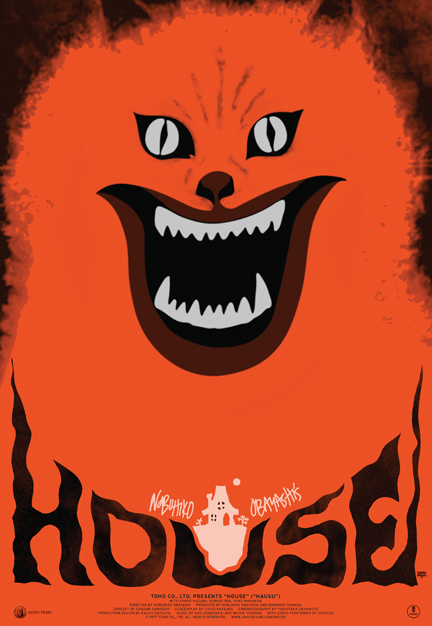
Hausu (1977) – Mark it 2.

Nobuhiko Obayashi’s campy horror film, Hausu (English translation, House), is one of the oddest things I’ve ever seen.  Hausu has developed a fairly large cult following due to its trippy surrealism (large enough to warrant a Criterion Collection release).  With its look of a 1970s after school special and cheesy scares á la The Evil Dead, with the comically amateurish editing of Tim and Eric Awesome Show, Great Job, describing this film is very difficult.  Seven schoolgirls, each defined by a singular character trait, visit an aunt’s house and fall victim one by one.  Hausu is obviously your standard haunted house movie (with many insanely weird elements).  These elements are undoubtedly the reason for its cult following, such as terrible acting, obvious sets, stilted dialogue, nonsensical plot, psychedelic animation, and unnecessary nudity.  However, not enough was original or interesting about the story itself to hook me beyond the cult film elements.  It was a struggle to just see Hausu to the end despite its 88-minute running time.


Shotgun Stories (2007) – Mark it 9.

Jeff Nichols’ directorial debut (of Take Shelter fame) is a gritty and fascinating revenge tale set in a dirt poor Arkansas town.  Michael Shannon stars as Son, the older brother of Boy (Douglas Ligon) and Kid (Barlow Jacobs).  The three were united by the hatred of their drunken father, who ran out on them, and their half-brothers, born after their father got sober, found God, and forgot his old family ever existed.  When the three crash the old man’s funeral and Son gives a hate-filled speech, the feud between each set of brothers starts going down its darkest paths.  Nichols devotes so much time developing the relationships between these three brothers that each blow in the feud is all the more painful to witness.  Son, Boy, and Kid grew up angry, barely make ends’ meat, and have settled for less.  The pain that these circumstances created overpowers every instinct telling them to let bygones be bygones.  The performances in Shotgun Stories are quietly intense and the story is riveting; this little known film blew me away.


Urbanized (2011) – Mark it 6.

Gary Hustwit, who somehow made a good documentary about a font (Helvetica), continues his “design” series with a far more appealing topic:  cities.  Urbanized is your standard talking head documentary involving architects, policy makers, and community members from around the world.  However, I love cities and found this topic very interesting (plus it is filled with beautiful cityscapes).  The 21st century will present urban designer everywhere with an incredible challenge.  As the world population continues to balloon, 75% of these people will be living in cities.   Urbanized stresses how this challenge must be viewed as an opportunity to innovate and revitalize our various metropolises.  Sprawl that divided communities and stretched resources will not work anymore.  But I was left hopeful that there are intelligent people up for the challenge and willing to involve the community when rethinking the old dogmas of urban design.

Monday, July 30, 2012

Beasts of the Southern Wild (2012)

Directed by Benh Zeitlin
Starring Quvenzhané Wallis, Dwight Henry

Since Beasts of the Southern Wild debuted at the festival circuit a few months back, there has been a swell of critical acclaim surrounding it.  From all that I had heard, Benh Zeitlin’s first full-length film was going to be a completely unique experience, centered with a mesmerizing performance by a 6-year-old girl.  It is needless to say that I couldn’t wait for Beasts of the Southern Wild to get a wider release and find its way to Milwaukee.  Apparently many others were just as anxious to see what all this critical chatter was about as well; it had the biggest opening weekend of the year at the little theater where I viewed it, according to its manager.  Shortly into the film, I was completely fascinated by the life portrayed in this forgotten but vibrant region of Louisiana’s lowlands, the Bathtub.  Zeitlin’s distinctive artistic flair and the intense lead performances (by unseasoned actors) made it a film far more memorable than your standard indie darling.

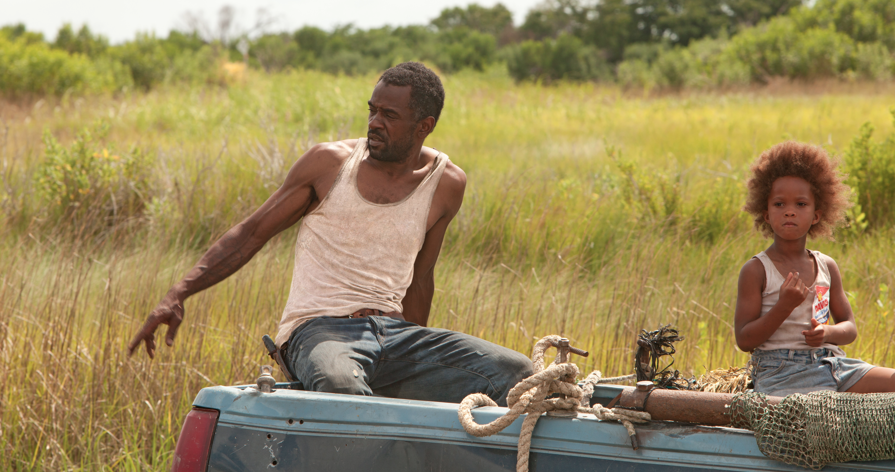
Told mostly through Hushpuppy’s narration, Beasts of the Southern Wild tells the story of a little girl and her troubled father as they try to survive in a world made inhospitable by a Hurricane Katrina-like natural disaster.  But before the survival tale comes to play, Zeitlin spends a considerable amount of time getting into the psyche of the young Hushpuppy (Quvenzhané Wallis) and showing us the world she must grow up in.

Hushpuppy and all her neighbors endure rough conditions to survive in the Bathtub even before the storm hits.  People in the Bathtub live among garbage in their one-room shacks, eat the animals they catch (or sometimes old cans of cat food), and quickly become hardened by their circumstances.  This world, on the wrong side of the levees, is so geographically close to a civilization we are more accustomed to (with oil rigs off in the distance), but culturally, the Bathtub might as well be another planet.  Which is exactly how its inhabitants like it.  Beasts of the Southern Wild is beautiful when the community comes together for an early celebration, inspiring when the people unite to move on after the flood, and terrifying when the outside world tries to interfere.  It seems that life in the Bathtub requires a special sort of person, but once you are strong enough to survive, the sense of togetherness that comes along is appealing.  
I loved watching this world unfold, get torn down and then rebuilt before my eyes.

The heart of the film lies in the performances by Quvenzhané Wallis and Dwight Henry, as her father, Wink (especially Wallis).  This 6 year-old is the focus of nearly every scene and carries the film admirably.  Having a mother who ran away from the Bathtub (and her family) and a father who, when he’s not missing, yells more than loves has forced Hushpuppy to grow up faster than a little girl ought to.  Wallis strikes an amazing balance to show that Hushpuppy is stronger and fiercer than most girls her age, but still views this harsh reality with a childlike innocence.  She wants her parents’ love more than anything and uses her imagination to explain the ways of the world.  Nothing changes the fact that she is a just small child, as much as Wink wants Hushpuppy to grow up quickly, for fear that he may not always be there to protect her.  By approaching the story from Hushpuppy’s point of view, we see how disastrous situations are interpreted through the lens of a child’s imagination.  This perspective adds a fantastical element to the drama of Beasts of the Southern Wild that enriches the overall experience.

The film integrates fantastical elements from Hushpuppy’s imagination in the reality in the Bathtub throughout the film.  The most obvious example, and one that isn’t always 100 percent effective, is the presence of the “aurochs,” a prehistoric predator.  In Hushpuppy’s mind, the danger of global warming is that a terrible monster, the aurochs, will be released from the ice to hunt down the people of the Bathtub.  As Hushpuppy faces more and more hardships, the metaphorical beasts charge their way closer and closer to the Bathtub.  While I love the idea of a child interpreting a global issue like climate change in such a visceral manner, Zeitlin’s execution may lose some viewers.  I preferred when the film’s fantastical elements were less direct, when intuited through her words/actions and the almost surreal camerawork.  However, this is a minor issue.

Acting as co-writer of the screenplay and writer of the score, Benh Zeitlin emerges as a great new talent in his directorial debut.  The character of Hushpuppy and the world of the Bathtub are hard to shake after watching Beasts of the Southern Wild and the bombastic score (that works well within the film) is memorable.  His film looks and feels unlike anything I’ve ever seen before.  Such a jarringly unique experience may not be for everyone, but I was on board with Zeitlin and Beasts of the Southern Wild.  

But Zeitlin’s greatest success might be the discovery of Quvenzhané Wallis.  At only 6, Wallis has an intense presence on screen when necessary, but also can show sweet side or a sad side.  This isn’t a great performance for a child, but a great performance for an actor.  It is amazing to think that she could accomplish something so good at such a young age.  As much as Benh Zeitlin pounds his directorial touch home, Wallis’ Hushpuppy will be the greatest part of Beasts of the Southern Wild.


As Beasts of the Southern Wild’s credits rolled, I was filled with a sense of joy over whatever was this work of art I just witnessed.  I was given a great cinematic character in Hushpuppy and a stylized feast for the eyes.  There is sadness in the story no doubt, but I left the theater optimistic over whatever Hushpuppy’s next steps may be regardless.  While it probably won’t be until its blu-ray release (in time for Oscar season, I’m sure), I cannot wait until I get another chance to revisit it.  There was a good deal of hype surrounding this film when I entered the theater, and Beasts of the Southern Wild affirmed that hype in the end.


Mark it 8.